Customer Stories

The people behind the credit.

Every loan Finarva writes has a workshop, a family, and a machine behind it. These are the businesses formal banking never saw — photographed where they actually work.

Story 01

Anantha Lakshmi

Kurugodu village
Roti Making Unit
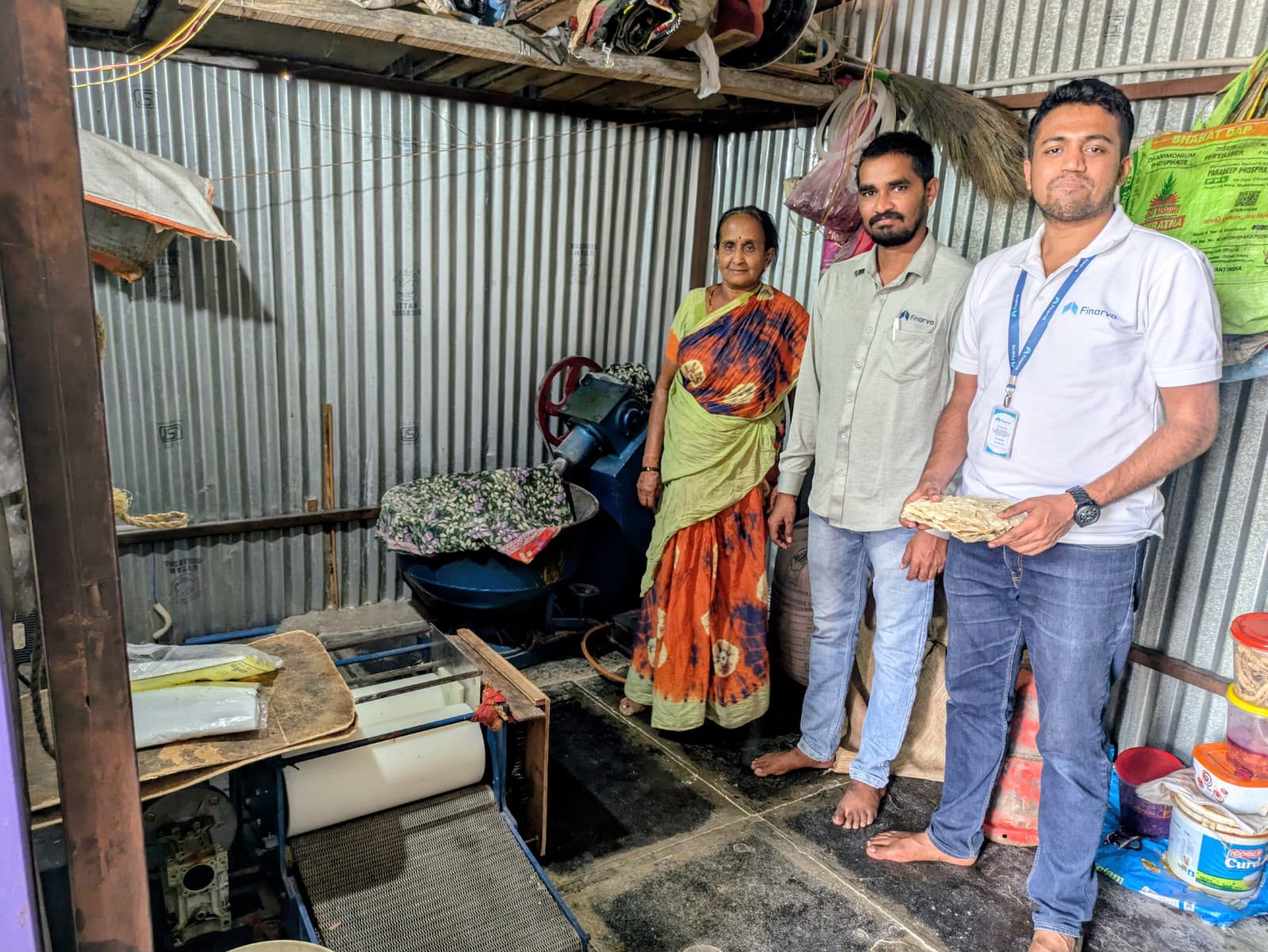
Anantha Lakshmi at her Roti Making Unit

The machine runs before sunrise. So does she.

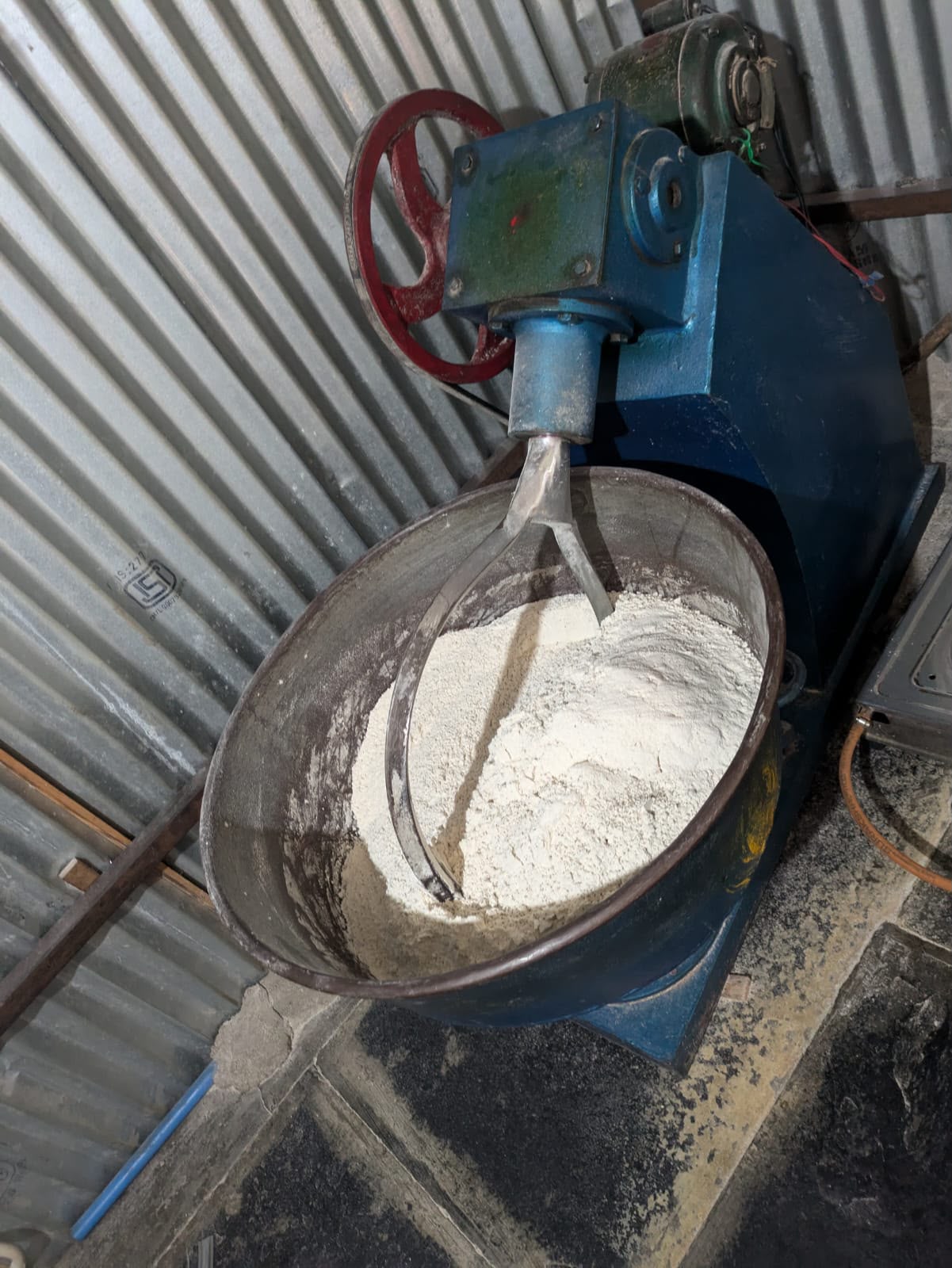
Anantha Lakshmi runs a roti making business out of a corrugated-tin workshop in Kurugodu village. What looks like a small operation is really a household enterprise — flour milled on one side, dough kneaded in the middle, rotis rolled and pressed out on a conveyor at the back.

This is exactly the kind of cash-flow business formal banking never learned to read: no GST invoices, no digital receipts, no collateral on paper. Just a machine, a family, and a route to the local market that has run every day for years.

Finarva underwrote the household — not the paperwork. The capital sits inside the workshop you're looking at.
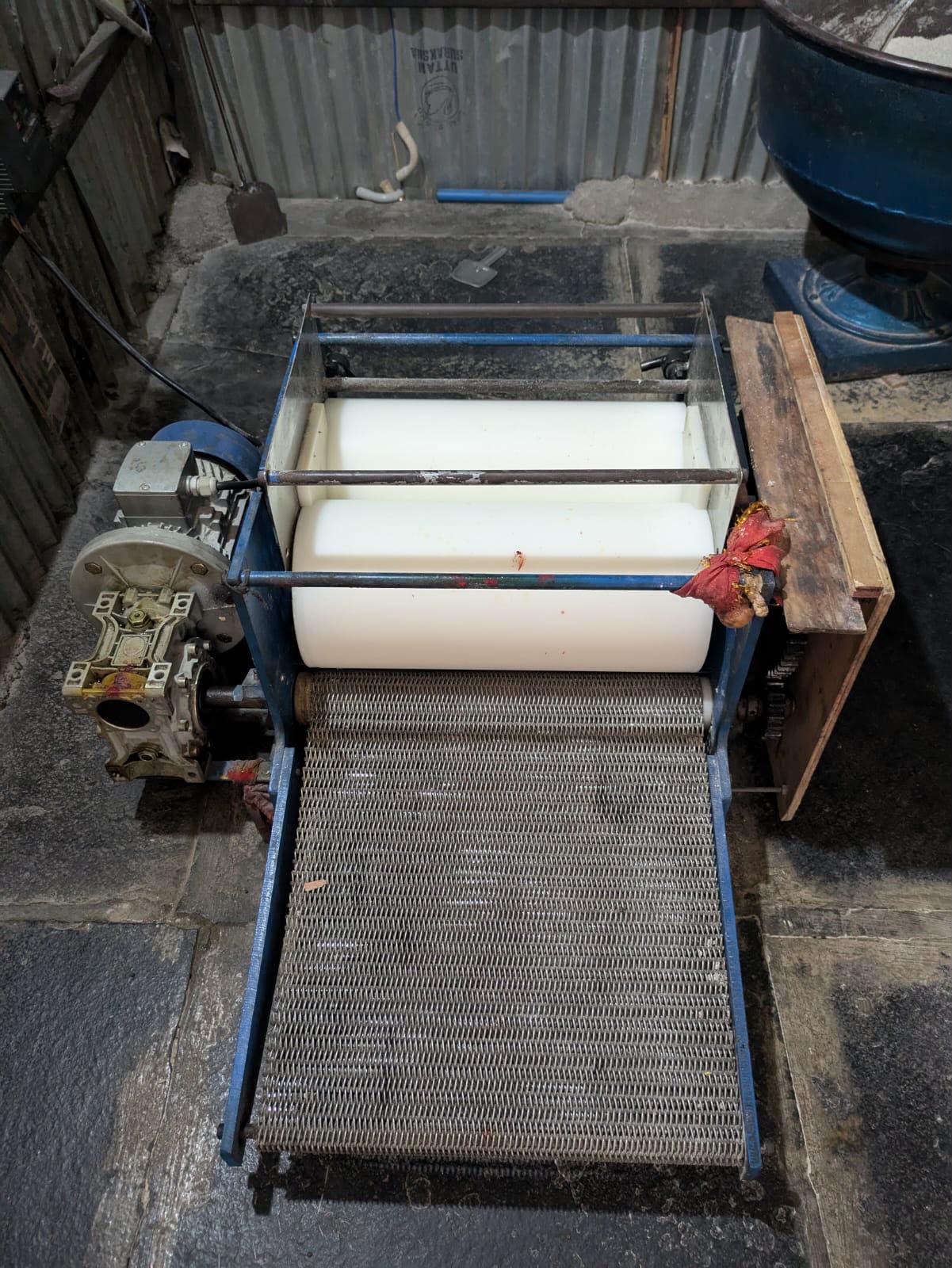
The roti conveyor — the heart of the unit.
Flour milled fresh, batch after batch.

Story 02

Kurubara Haalurappa

Kurugodu village
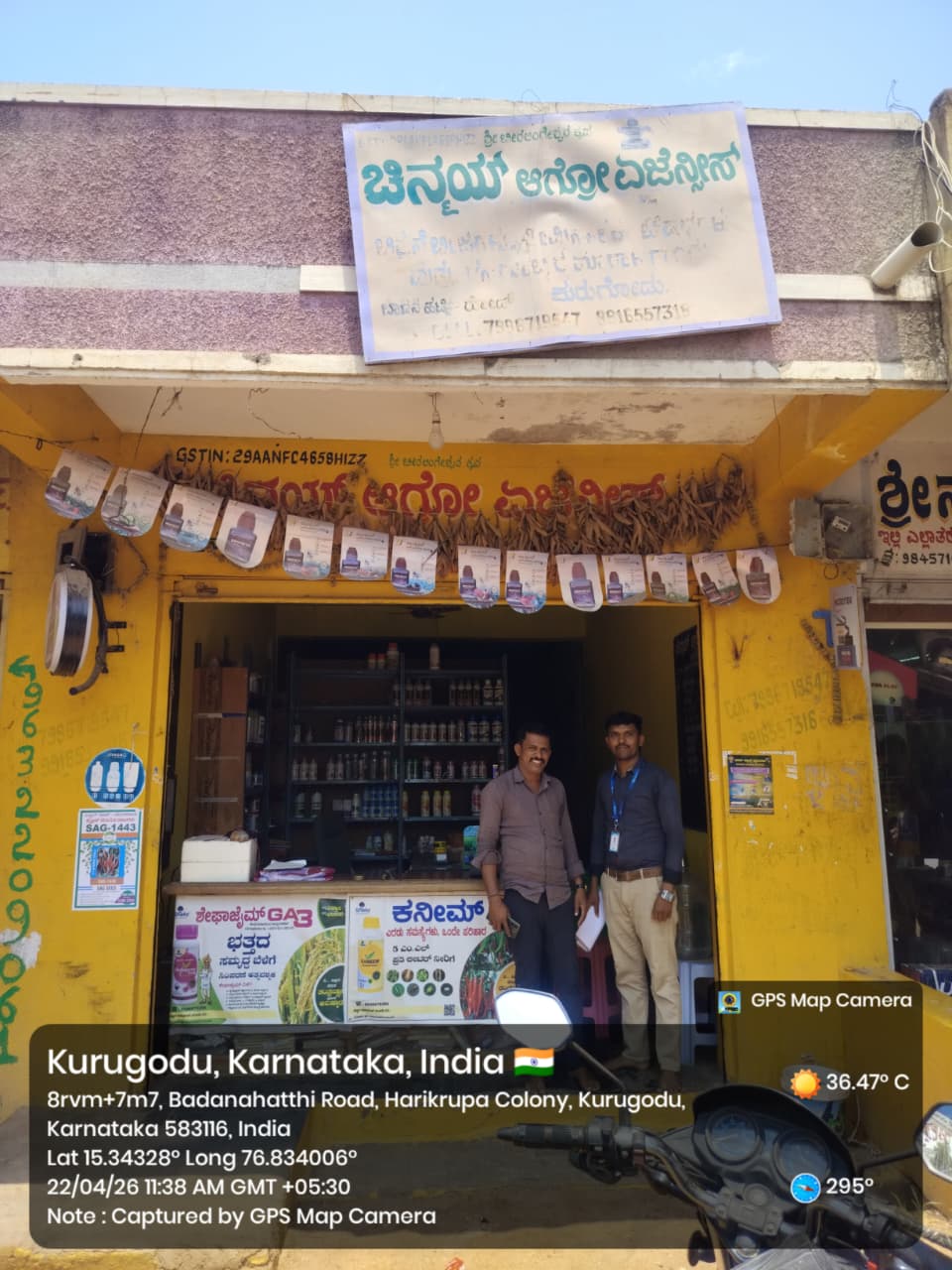
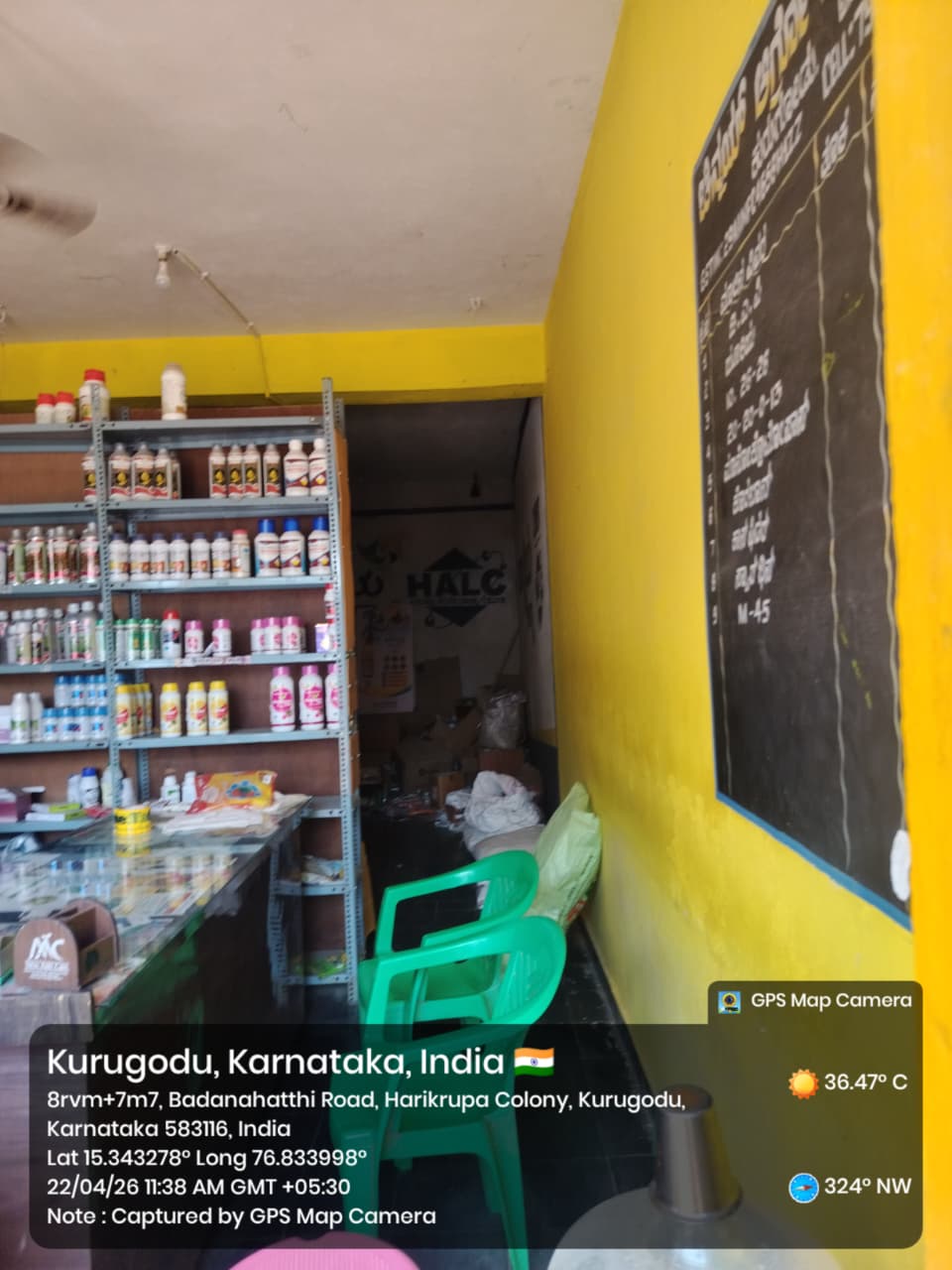
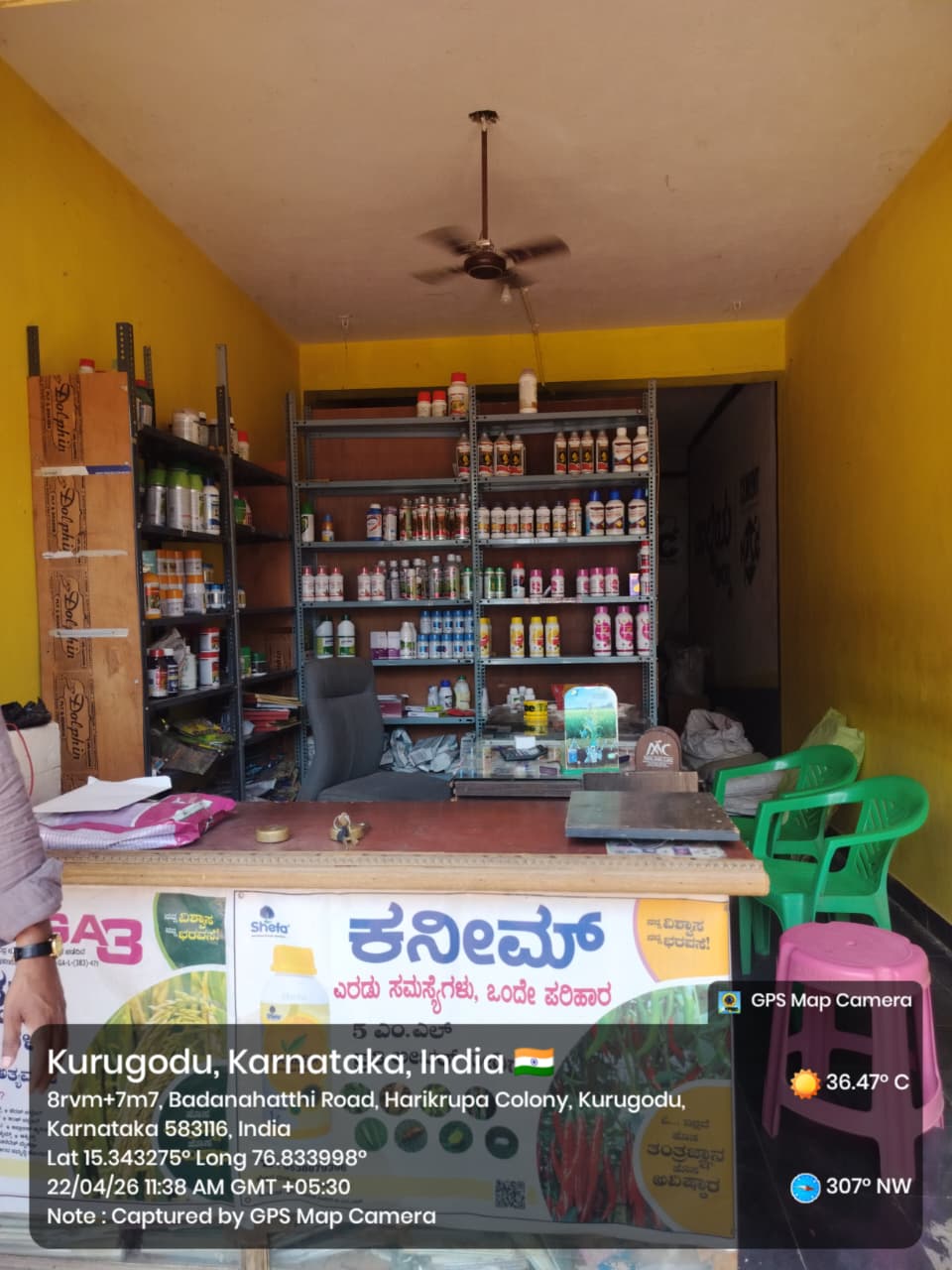
Chinnayya Agro Agencies — Fertiliser Shop
Kurubara Haalurappa at her Chinnayya Agro Agencies — Fertiliser Shop

GST filed. Bank statement clean. Registration in order. Still invisible — until we funded him in 2 days.

Haalurappa runs Chinnayya Agro Agencies on Badanahatthi Road in Kurugodu — a fertiliser and agri-input shop that supplies the farmers around the village. His ask was simple and sharp: a working-capital ticket to buy stock early, ahead of the season.

Early buying means bigger supplier discounts. Bigger discounts mean he can sell fertilisers to local farmers at a lower price. One loan, cascading down the value chain — the shopkeeper, the supplier, and every farmer walking through his door.

On paper he already had what banks say they want: a GST number, months of bank statements, a registration certificate. And still — the formal system couldn't see him fast enough. Applications sat, questions circled, seasons don't wait.

Finarva underwrote the household and the shop together and disbursed in 2 days. The stock is on the shelves. The season starts on time.

Stock, bought early, discount locked in.
The counter where the season begins.

Story 03

Doddaiah Swamy

Kurugodu village
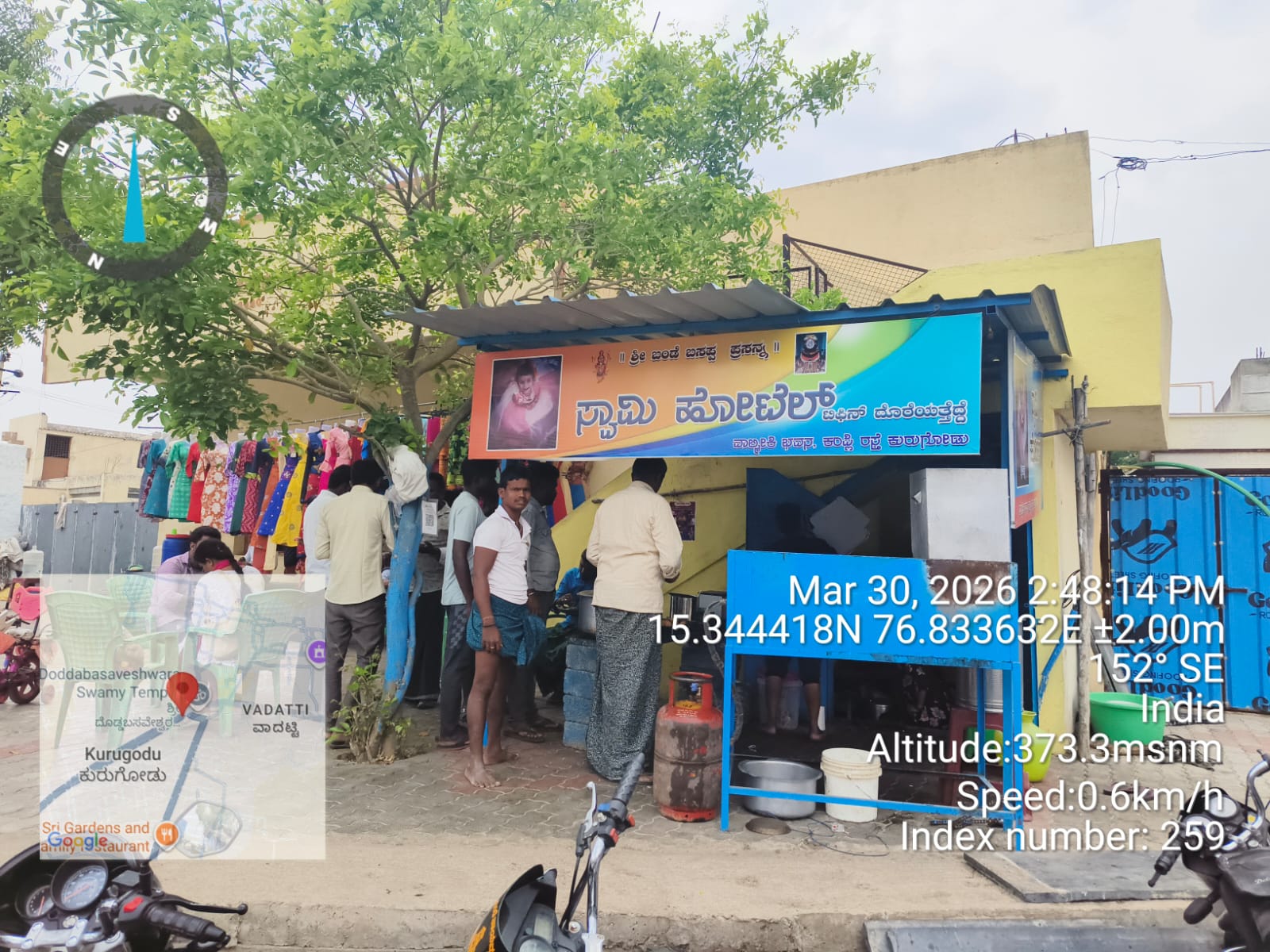
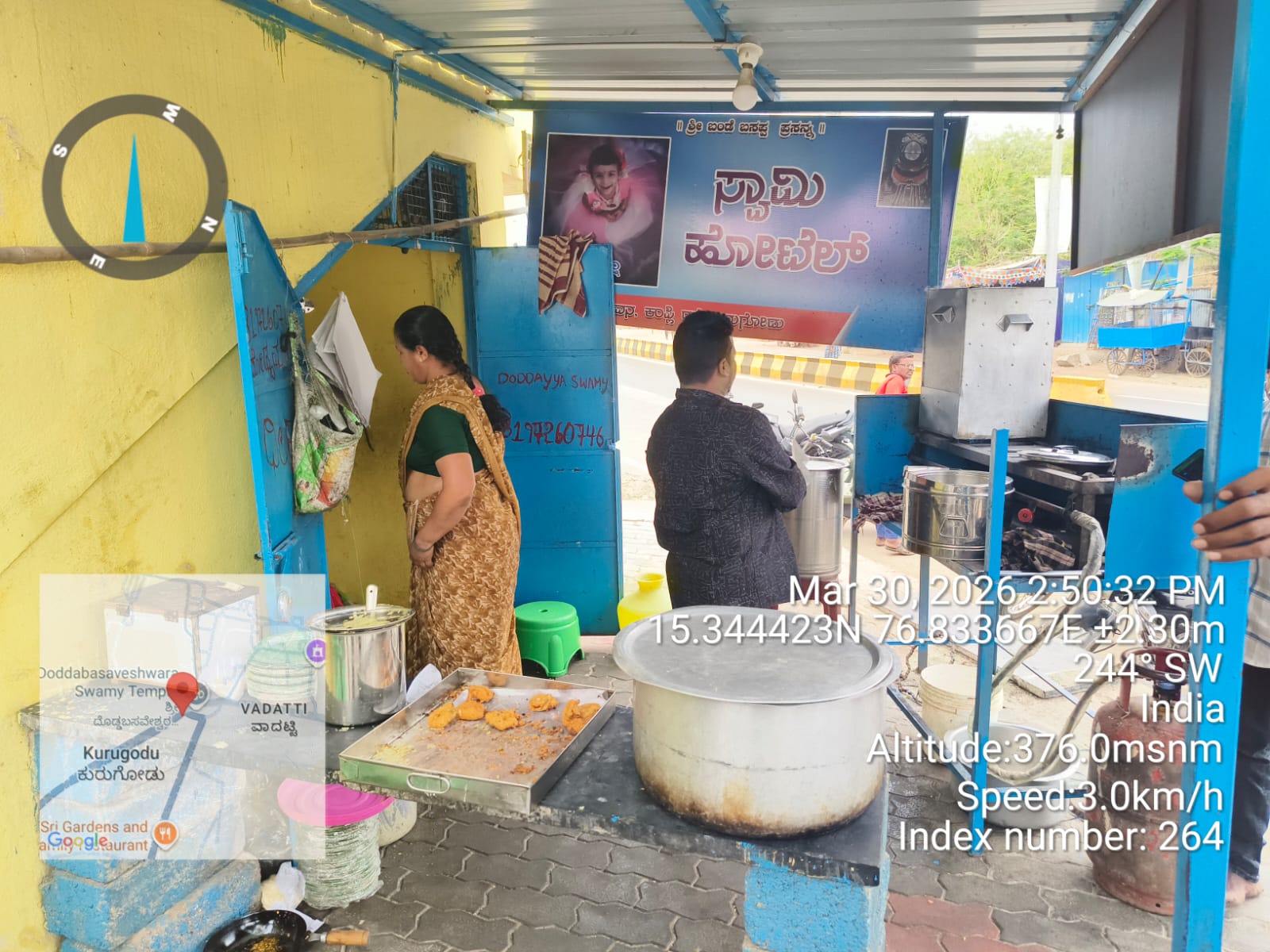
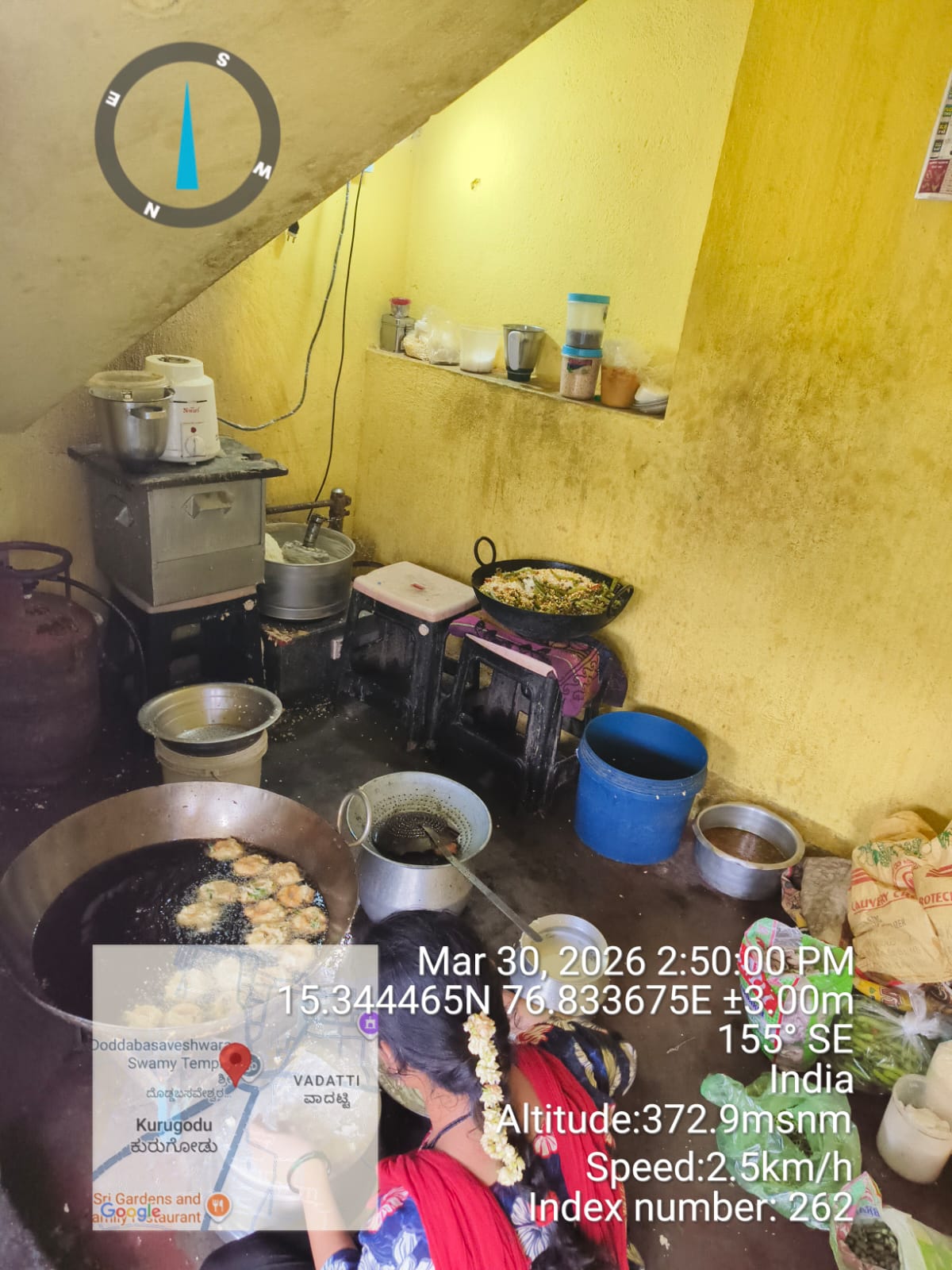
Swamy Hotel — Roadside Kitchen
Doddaiah Swamy at her Swamy Hotel — Roadside Kitchen

Cash-strong. Bureau-clean. Ambition, bigger than the kitchen.

Doddaiah Swamy runs Swamy Hotel on the Kampli road out of Kurugodu — a busy roadside kitchen serving hot bondas, rice plates, and tea to travellers, drivers, and the crowd from the village opposite.

The business runs on cash. Every plate sold, every tea poured — settled at the counter, on the spot. No POS trail, no invoices, no digital receipts. To a formal lender's file, this cash intensity often looks like risk. To anyone standing at his counter for ten minutes, it looks like exactly what it is: a healthy, high-frequency, high-margin operation.

His bureau score was already clean. What sealed the underwriting was the Household Liability Group lens — we looked at the family as a single credit unit: the hotel, the household expenses, the co-earners, the standing in the community. The picture came together sharper than any single-line document could have shown.

He wanted the capital to upgrade the shop — better seating, better kitchen, a cleaner front for the customers he already has. Finarva funded the improvement, not just the balance sheet.

The counter — where every plate settles in cash.
Behind the shop — the kitchen that feeds the road.

Story 04

Lakshman

Ballari village
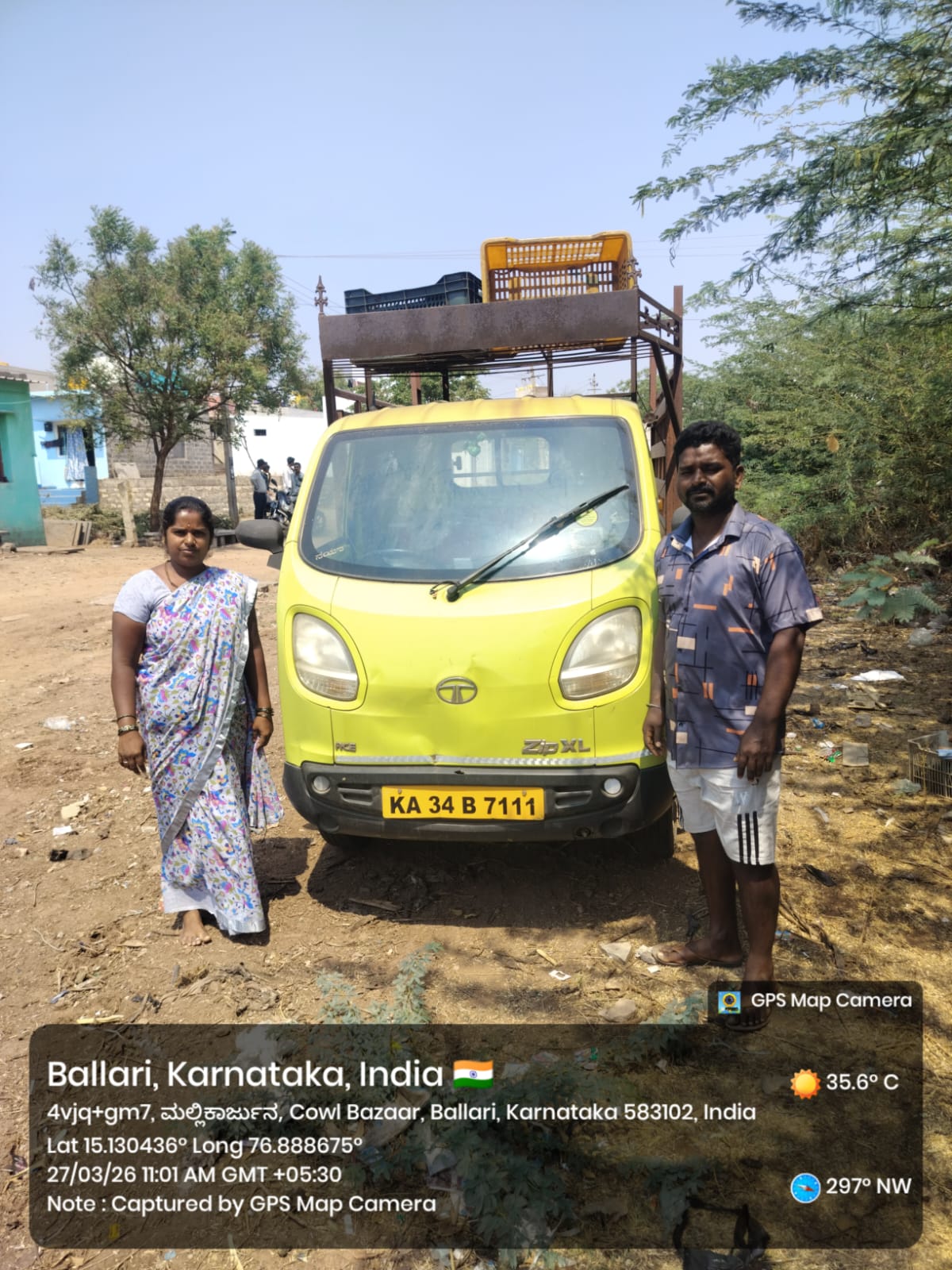
Vegetable Supply — Market to Local Shops, Hostels & Hotels
Lakshman at her Vegetable Supply — Market to Local Shops, Hostels & Hotels

He's finished a day's work by the time the city wakes up at 9.

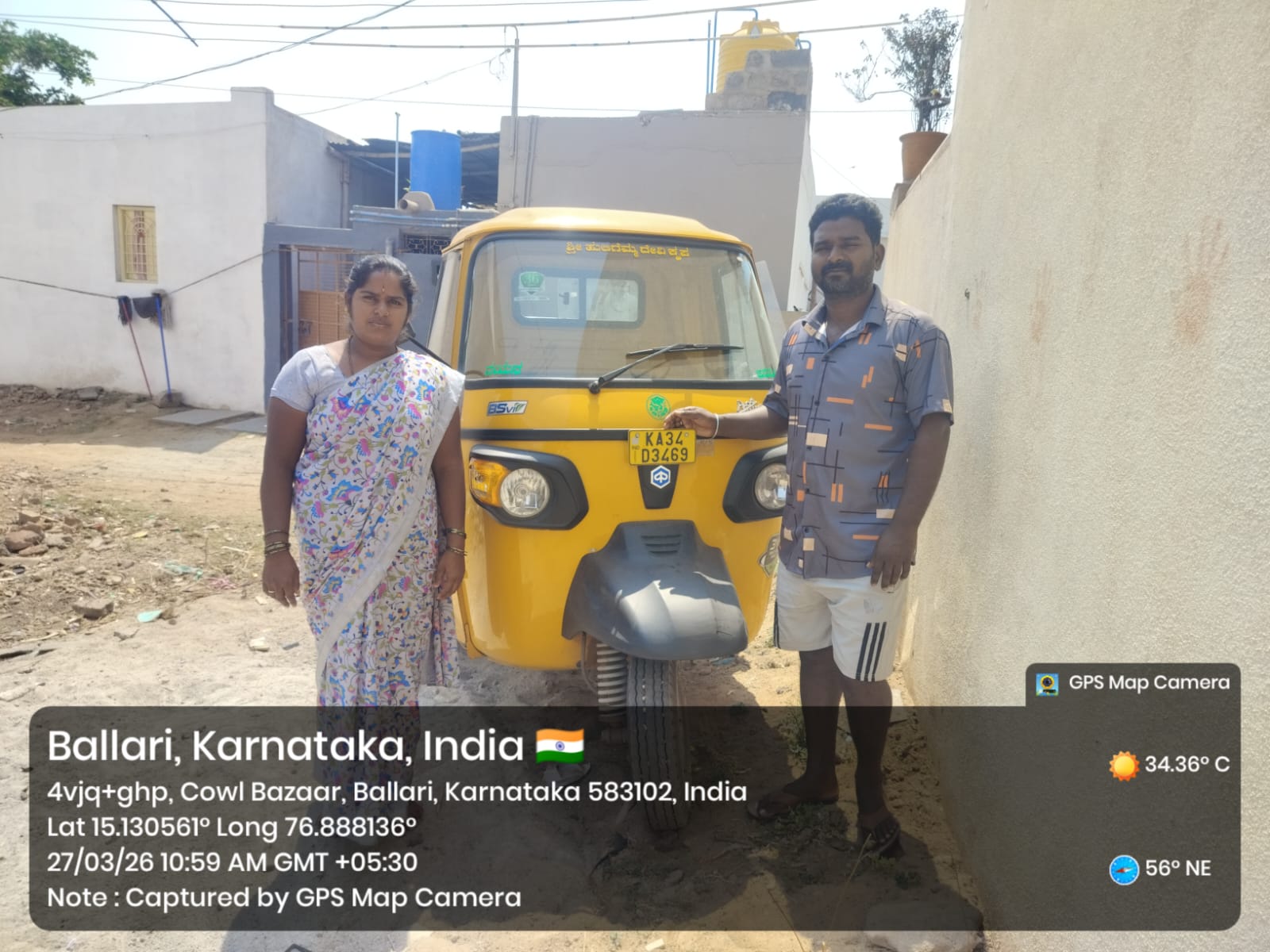
Lakshman wakes at 3 AM. By the time Ballari opens its shutters at 9, he has already run the wholesale market, loaded his vehicle, and delivered vegetables to the local shops, hostels, and hotels on his route. It's a full day's business — done before most people have had their first cup of tea.

On paper, he was invisible. No GST. No invoices. But the business was real, running, and healthy — and the proof was sitting in a bank statement he didn't even know how to pull. We helped him get it. That single document, plus the vehicle he owns and operates, told the whole story.

The bigger problem wasn't the business — it was the debt trap around it. A local lender at 3% flat, repaid daily. Every rupee of margin was leaking into interest before it ever reached the family.

Finarva gave him the capital edge: enough to clear the older, punitive debt and still have working capital left to invest into the route. Underwriting the household — the vehicle, the statements, the daily cash cycle, the family — not the paperwork he didn't have.

On the pre-disbursal call, we asked him what he's building. Five-year answer: his own vegetable shop, more customers, a bigger route. That's the ladder this loan is for.

The Tata Zip — the route on wheels.

Story 05

Alima

Kurugodu village
Fruit Vendor — Kurugodu Market
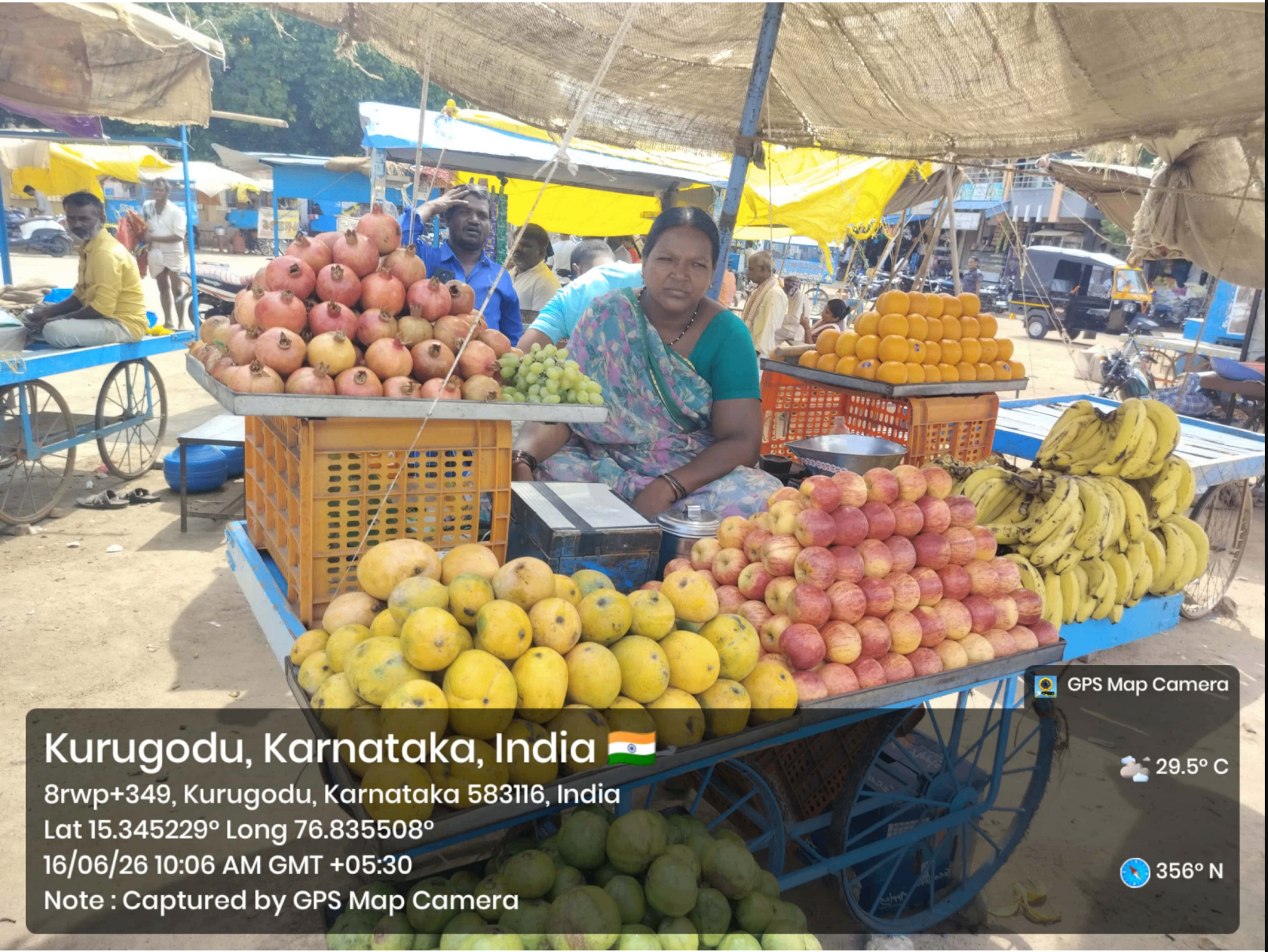
Alima at her Fruit Vendor — Kurugodu Market

No shop. No bank app. Five years in the same spot — and a statement that tells the whole story.

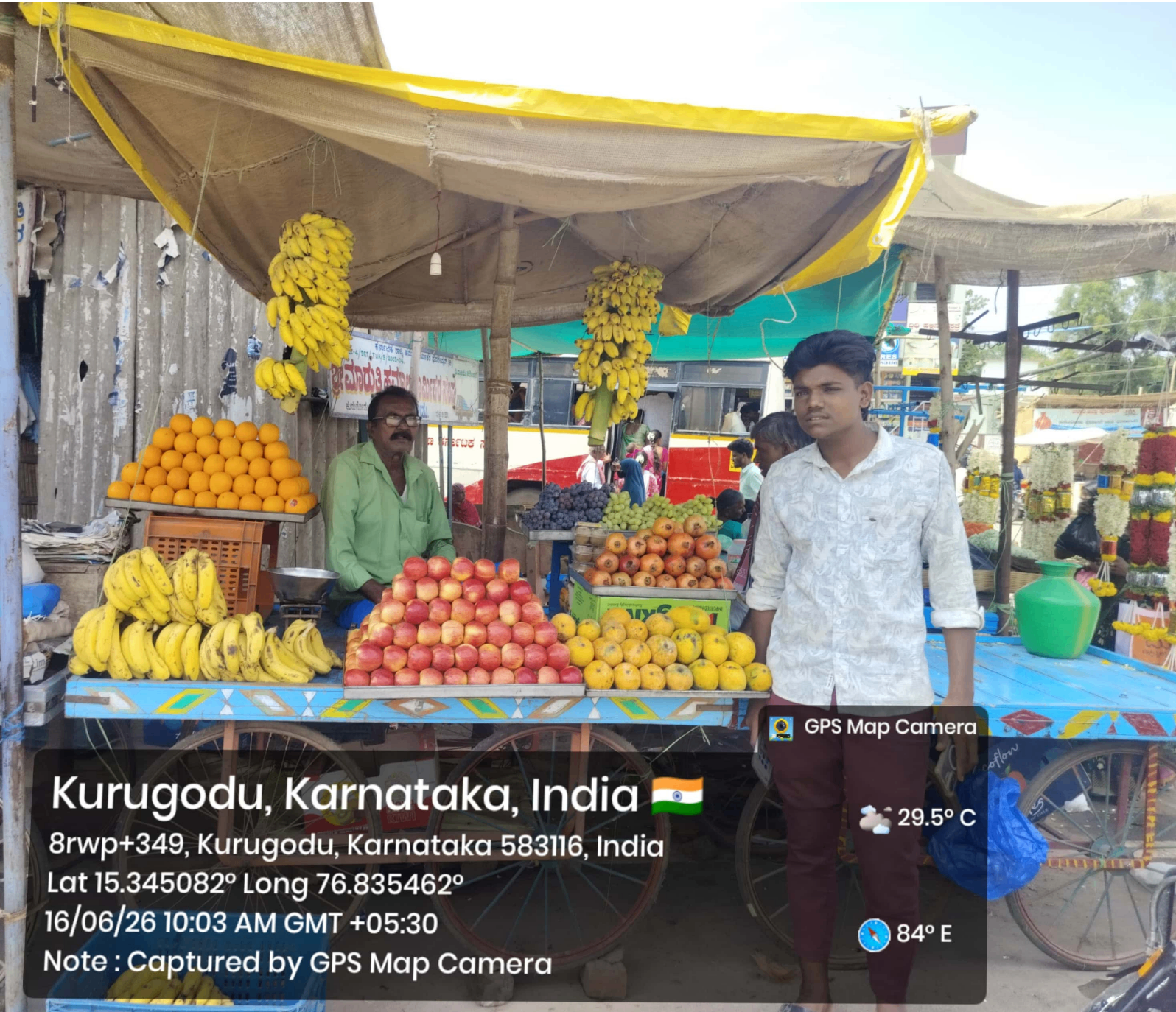
Alima sells fruit at Kurugodu market — pomegranates, oranges, apples, mangoes, bananas, stacked on a hand-cart under a tarpaulin. She doesn't own the shop. She doesn't know how to operate a bank account on a phone. Walking into a formal bank branch and filling out an application isn't part of her world.

What she does have: the same spot in the same market for more than five years, and a bank statement that quietly proves the business is real, consistent, and healthy.

Local microfinance lenders cap her at ₹1.5 lakh. Anything above that, they ask her to pledge her house — and that's where the system breaks. She was born and raised here, the family has lived on the same land for generations, but the paperwork to make that house 'pledgeable' takes months of jugaad — clearing titles, chasing documents, running between offices. Meanwhile the season moves on and the working capital never arrives.

Finarva disbursed ₹3 lakh in 2 days. Our branch-led model plus the Household Liability Group lens made it possible: a human meeting her at the cart, the household underwritten as a single credit unit, the five-year track record read for what it is. An app-only lender could not have reached her — she'd never download it, never onboard, never clear KYC through a screen.

What she liked most: daily repayment. Small amounts, every day, off the day's fruit sales. No looming end-of-month burden — just the rhythm of the business itself.

The market — five years in the same spot.

For Investors

One tiny corner of a much larger ocean.

There are 7.5 crore small and medium businesses in India. 85% of them still do not have access to the right capital. We have reached only a fragment of that gap — and the depth of the opportunity is what keeps us building.

Help us reach these people.

Connect with us to get involved